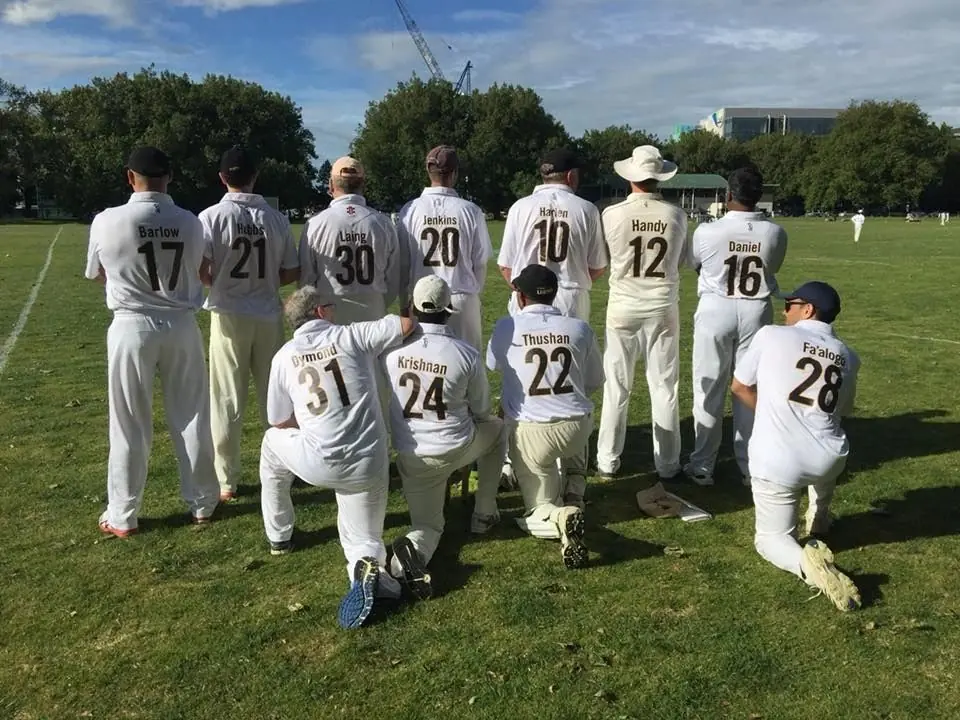
Presidents Grade Cricket-Auckland FB
The air was thick with tension. Every single moment felt important in this crucial cricket match. Team A desperately needed runs, and Team B desperately needed wickets. The bowler for Team B was super fast, throwing the ball at 130 kilometers per hour, like fire.
At the other end, Team A's last batsmen, usually not very good, were playing calmly, only hitting the ball if they had to, or just letting it go past. It was a very tense game, especially since many people don't find long test matches exciting anymore. Both teams had a real chance to win and show they were the best. No one was giving up. Even in the stands, coaches, players, and staff were biting their nails.
The bowler took the ball and walked back to his starting spot. He felt he needed to get his run-up perfect, so he walked up to the batting area and started again. Now he was ready to bowl, and the batsman was ready too. The bowler started running, rushed to the crease, and let the ball go. It hit the ground, just touched the bat, and flew towards the fielder standing in the slip position.
This was a winning catch, the kind that decides the game. The fielder, an experienced player, got his hands to it... and dropped it.
A huge sigh, then a groan, and then a wave of booing swept through the stadium. The sound was like a physical punch, a million voices angry at one player.
The bowler, his face full of anger, spun around, staring hard at the fielder. Then he looked at his captain, expecting anger, maybe a shared look of frustration.
But what he saw, what everyone in the stadium saw, was something special. The captain, looking at his upset fielder, started to clap. A slow, steady, encouraging clap. He gave a quiet nod that seemed to say, "Great effort! You almost had it!"
The fielder, a tough player who had played for his country for over ten years, knew how big his mistake was. He didn't need the crowd booing him; his own shame was much worse. He felt terrible, his heart sinking. He blamed himself. He couldn't face his teammates, the angry bowler, or even the captain. Shame burned in him, making him wish the ground would just open up and swallow him.
Slowly, he lifted his head and saw his captain. Then he heard his captain's voice, cutting through the angry crowd, clear and calm: "Great try! Bad luck!"
That was all it took. Just a few simple words, but they were like a lifeline, a cure for his sadness. In that moment, the heavy feeling lifted. The shame started to go away. It was enough. Enough to make him bounce back, to jump into his position with 200% more desire than before. He felt a huge burst of energy, like a thousand elephants' worth of confidence, ready to field or catch the next ball with incredible focus.
It was a moment I will never forget, and it made me think deeply.
Being a Good Leader
1. What the Captain Was Thinking
The captain, even with all the pressure of the game, was thinking smart and with care:
He knew it was a big mistake. Of course, he felt the disappointment of a dropped catch that could lose them the game. He wanted to help the team keep playing. He understood that getting angry would only make the fielder feel worse, which could lead to more mistakes. His main goal was to help the fielder get back in the game mentally. He focused on the "next step." The game wasn't over. He knew they needed everyone to stay focused to win. Getting stuck on the past mistake wouldn't help; giving power for the future would.
- He knew it was a big mistake. Of course, he felt the disappointment of a dropped catch that could lose them the game.
- He wanted to help the team keep playing. He understood that getting angry would only make the fielder feel worse, which could lead to more mistakes. His main goal was to help the fielder get back in the game mentally.
- He focused on the "next step." The game wasn't over. He knew they needed everyone to stay focused to win. Getting stuck on the past mistake wouldn't help; giving power for the future would.
2. How the Fielder Felt
The fielder went from feeling terrible to feeling strong again:
Deep Shame and Guilt: Because he was an experienced player, he immediately understood how huge his mistake was. He felt very bad about letting his team and country down. The crowd's booing made him feel even worse. Frozen by Sadness: Before the captain spoke, he was probably frozen in place, unable to move on, completely taken over by his big mistake. Changed by Support: The captain's simple, kind words ("Great try! Bad luck!") were like medicine for his mind. They took away the huge weight of self-blame. They recognized his effort, focusing on how hard it was rather than just the mistake. This support allowed him to stop feeling sorry for himself and start wanting to make things right.
- Deep Shame and Guilt: Because he was an experienced player, he immediately understood how huge his mistake was. He felt very bad about letting his team and country down. The crowd's booing made him feel even worse.
- Frozen by Sadness: Before the captain spoke, he was probably frozen in place, unable to move on, completely taken over by his big mistake.
- Changed by Support: The captain's simple, kind words ("Great try! Bad luck!") were like medicine for his mind. They took away the huge weight of self-blame. They recognized his effort, focusing on how hard it was rather than just the mistake. This support allowed him to stop feeling sorry for himself and start wanting to make things right.
3. What if They Still Lost?
Even if the captain's team still lost the game because of that dropped catch, his actions still show he's a great leader.
Building a Strong Team for the Future: While winning is important, a good leader also thinks about the long-term health of their team. Shaming the fielder might have made someone feel better in the moment, but it would have hurt the fielder's career, broken team trust, and might have caused more problems later. Learning from Mistakes: A loss, even a painful one, can be a chance to learn when handled well. The captain's way of dealing with it helps the team talk about what went wrong, learn from it, and become stronger, instead of feeling sad and afraid to try. Better Future Performance: The fielder, after getting such strong support, will likely play much better in future important moments. He'll be driven by loyalty and a desire to repay the captain's trust, making the team stronger in the long run.
- Building a Strong Team for the Future: While winning is important, a good leader also thinks about the long-term health of their team. Shaming the fielder might have made someone feel better in the moment, but it would have hurt the fielder's career, broken team trust, and might have caused more problems later.
- Learning from Mistakes: A loss, even a painful one, can be a chance to learn when handled well. The captain's way of dealing with it helps the team talk about what went wrong, learn from it, and become stronger, instead of feeling sad and afraid to try.
- Better Future Performance: The fielder, after getting such strong support, will likely play much better in future important moments. He'll be driven by loyalty and a desire to repay the captain's trust, making the team stronger in the long run.
Leading in the Workplace
When project deadlines are missed, new system launches are delayed, unexpected problems pop up, or a key feature doesn't work, how do we, as managers, react?
The Bad Way: Do we, like the angry bowler at first, try to find who made the mistake, shame them in front of others, or even fire them? This way of doing things, while it might make you feel like you're holding someone accountable, often creates a culture of fear, blame, and hiding mistakes. Team members become scared to report problems, take risks, or try new things. They'll focus on protecting themselves instead of solving problems. Building Strong Teams: The cricket captain shows us a powerful way to lead when things go wrong: Stay Calm: Keep your cool. Your reaction sets the mood for the entire team. A calm approach, focused on finding solutions, builds confidence and helps everyone recover. Make People Feel Safe: By showing support and understanding when mistakes happen, you create an environment where your team feels safe to admit errors, share challenges, and work together to find solutions without fearing big punishments. This safety is key for new ideas and high-performing teams. Focus on Solutions, Not Blame: Change the conversation from "Whose fault is this?" to "What happened, what can we learn, and how do we move forward?" This helps everyone learn and grow. Remind Them of Their Value: Acknowledge their hard work and tell them you still believe in their skills. A simple "We'll get through this together" or "I know you're very capable" can give huge power
- The Bad Way: Do we, like the angry bowler at first, try to find who made the mistake, shame them in front of others, or even fire them? This way of doing things, while it might make you feel like you're holding someone accountable, often creates a culture of fear, blame, and hiding mistakes. Team members become scared to report problems, take risks, or try new things. They'll focus on protecting themselves instead of solving problems.
- Building Strong Teams: The cricket captain shows us a powerful way to lead when things go wrong: Stay Calm: Keep your cool. Your reaction sets the mood for the entire team. A calm approach, focused on finding solutions, builds confidence and helps everyone recover. Make People Feel Safe: By showing support and understanding when mistakes happen, you create an environment where your team feels safe to admit errors, share challenges, and work together to find solutions without fearing big punishments. This safety is key for new ideas and high-performing teams. Focus on Solutions, Not Blame: Change the conversation from "Whose fault is this?" to "What happened, what can we learn, and how do we move forward?" This helps everyone learn and grow.
- Remind Them of Their Value: Acknowledge their hard work and tell them you still believe in their skills. A simple "We'll get through this together" or "I know you're very capable" can give huge power
- Stay Calm: Keep your cool. Your reaction sets the mood for the entire team. A calm approach, focused on finding solutions, builds confidence and helps everyone recover.
- Make People Feel Safe: By showing support and understanding when mistakes happen, you create an environment where your team feels safe to admit errors, share challenges, and work together to find solutions without fearing big punishments. This safety is key for new ideas and high-performing teams.
- Focus on Solutions, Not Blame: Change the conversation from "Whose fault is this?" to "What happened, what can we learn, and how do we move forward?" This helps everyone learn and grow.
Be the Captain Your Team Needs
Be a leader who shows support and understanding. When your team faces problems, when projects hit a snag, or when someone makes a big mistake, don't immediately blame them. Instead, try to understand how they feel. Think about the pressure, the self-doubt, the frustration they might be experiencing.
Your job isn't just to manage tasks; it's to help people reach their full potential. By offering support, helping them bounce back, and creating a place where mistakes are seen as chances to learn instead of career-ending events, you empower your team to not just recover, but to charge forward with new drive and huge confidence.
Be the leader who claps when the crowd boos. Be the leader who helps when others point fingers. Be the leader who turns bad moments into strong pushes for amazing effort and deep loyalty. Your team's success, and your own, depends on this